
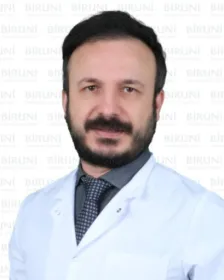
Le Pr Okay Abacı est cardiologue, spécialisé en cardiologie interventionnelle, en maladies artérielles périphériques, en valvulopathies cardiaques, en hypertension, en hyperlipidémie et en insuffisance cardiaque. Il est diplômé de la Faculté de médecine de l’Université Uludağ en 2005 et a commencé la même année sa spécialisation au Département de cardiologie de l’Institut de cardiologie de l’Université d’Istanbul, achevant avec succès sa formation de spécialité en 2010. Après sa formation de spécialité, il a effectué son service obligatoire pendant deux ans à l’Hôpital public d’Adıyaman, avant de rejoindre l’Institut de cardiologie de l’Université d’Istanbul-Cerrahpaşa, où il a obtenu le titre de maître de conférences en 2017. Durant sa spécialisation, il a réalisé de nombreuses interventions dans le domaine des maladies cardiovasculaires et artérielles périphériques, et il a suivi en 2018 en Italie une formation universitaire à l’intervention dans les maladies artérielles périphériques. Il a obtenu le titre de professeur en 2022 et exerce actuellement à l’Hôpital universitaire Biruni, Faculté de médecine. Il a mené des travaux conjoints avec des experts de référence en Turquie, en particulier sur l’angiographie cardiaque et l’angiographie des membres inférieurs, et suit régulièrement les congrès, séminaires et cours de cardiologie nationaux et internationaux. Il compte plus de 100 publications nationales et internationales dans son domaine. Il est membre de la Société turque de cardiologie, de l’Association européenne des interventions cardiovasculaires percutanées, de la Société européenne de cardiologie et de l’association SCAI.
Formation
-
Formation de spécialité en cardiologie
Institut de cardiologie de l’Université d’Istanbul, Istanbul/Turquie
2010
-
Doctorat en médecine (M.D.)
Faculté de médecine de l’Université Uludağ, Bursa/Turquie
2005
Rôles académiques et administratifs
-
Professeur, cardiologie
Hôpital universitaire Biruni, Faculté de médecine
Aujourd’hui
-
Maître de conférences, cardiologie
Institut de cardiologie de l’Université d’Istanbul-Cerrahpaşa, Istanbul/Turquie
2012–2021
-
Spécialiste en cardiologie (service obligatoire)
Hôpital public Adıyaman 82e Année, Adıyaman/Turquie
2010–2012
- Société turque de cardiologie
- Association européenne des interventions cardiovasculaires percutanées
- Société européenne de cardiologie
- Association SCAI
-
Impact of Rosuvastatin on Contrast-Induced Acute Kidney Injury in Patients at High Risk for Nephropathy Undergoing Elective Angiography
The American Journal of Cardiology · 2015 -
Long-Term Follow-Up of Patients at High Risk for Nephropathy After Contrast Exposure
Angiology · 2015 -
Platelet-to-Lymphocyte Ratio Predicts Contrast-Induced Nephropathy in Patients With Non-ST-Segment Elevation Acute Coronary Syndrome
Angiology · 2015 -
Relationship between serum endothelin-1 level and spontaneous reperfusion in patients with acute myocardial infarction
Coronary Artery Disease · 2015 -
Percutaneous coronary intervention vs. optimal medical therapy - the other side of the coin: medication adherence
Journal of Clinical Pharmacy and Therapeutics · 2013 -
Chronic Kidney Disease as a Predictor of Coronary Lesion Morphology
Angiology · 2010 -
Admission Hyperglycemia and TIMI Frame Count in Primary Percutaneous Coronary Intervention
Angiology · 2012 -
Laboratory signs of aspirin response in haemodialysis patients
Scandinavian Journal of Clinical & Laboratory Investigation · 2011 -
N-acetylcysteine versus N-acetylcysteine + theophylline for the prevention of contrast nephropathy
European Journal of Clinical Investigation · 2009 -
The Relationship Between Chronic Kidney Disease and SYNTAX Score
Angiology · 2011 -
Relationship Between Increased Serum Resistin Level and Severity of Coronary Artery Disease
Angiology · 2014 -
Contrast-Induced Acute Kidney Injury Is Associated With Long-Term Adverse Events in Patients With Acute Coronary Syndrome
Angiology · 2017 -
Author's Reply
Anatol J Cardiol · 2018 -
Authors' reply
Turk Kardiyol Dern Ars · 2017 -
Avoiding the emergence of contrast-induced acute kidney injury in acute coronary syndrome: routine hydration treatment
Coron Artery Dis · 2020 -
Effect of chronic toluene exposure on heart rhythm parameters
Pacing Clin Electrophysiol · 2018 -
The relationship between protein convertase subtilisin kexin type-9 levels and extent of coronary artery disease in patients with non-ST-elevation myocardial infarction
Coron Artery Dis · 2020 -
Effects of ECE-1b rs213045 and rs2038089 polymorphisms on the development of contrast-induced acute kidney injury in patients with acute coronary syndrome
J Int Med Res · 2020 -
Comparative performance of AnTicoagulation and Risk factors In Atrial fibrillation and Global Registry of Acute Coronary Events risk scores in predicting long-term adverse events in patients with acute myocardial infarction
Anatol J Cardiol · 2018 -
Avoiding the emergence of contrast-induced acute kidney injury in acute coronary syndrome: routine hydration treatment
Coron Artery Dis · 2021 -
Long-Term Follow-Up of Patients With Isolated Side Branch Coronary Artery Disease
Angiology · 2021 -
Comparison of Rosuvastatin versus Atorvastatin for Preventing Postoperative Atrial Fibrillation
The Heart Surgery Forum · 2013 -
Matrix Metalloproteinase-2 and -9 Levels in Patients with Dilated Ascending Aorta and Bicuspid Aortic Valve
Echocardiography · 2013 -
Aspirin resistance: Where are we now?
Anatolian Journal of Cardiology · 2013 -
Increase in Qtc Dispersion Predicts Arrhythmic Events in Patients with Cardiac Resynchronization Therapy
Russian Journal of Cardiology · 2014
Cardiologie